
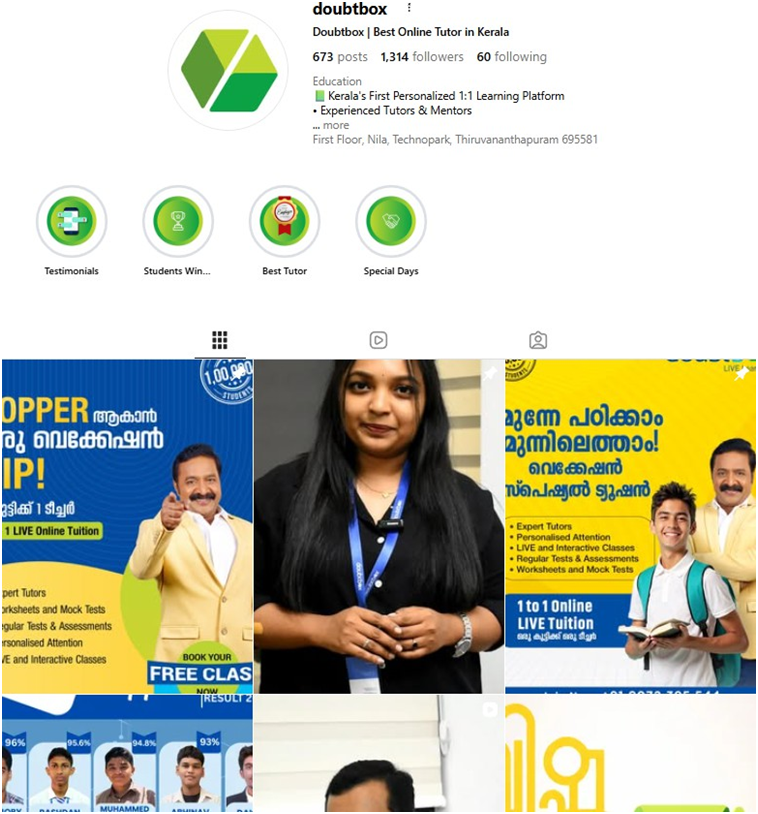
Doubtbox, an emerging EdTech platform, approached Advantage Marketing Solutions with a very specific goal: generate high-quality leads at a cost that made business sense. Like many brands in the education space, they weren’t just looking for volume, they needed leads that would actually convert into paying users.
The challenge was clear. The EdTech space is highly competitive, with multiple brands targeting the same audience. Students and parents are constantly exposed to ads, making it harder to capture attention and even harder to build trust. In such an environment, running ads alone is not enough. The strategy needs to be precise, efficient, and continuously optimized.

The Challenge
Doubtbox was already offering value through its platform, but its lead generation efforts needed structure and scalability. The brand required a system that could consistently deliver leads without inflating acquisition costs.
There were three key challenges:
● Generating high-intent leads instead of casual sign-ups
● Reducing drop-offs during the lead capture process
● Maintaining consistent performance over time
The goal was not to create a one-time spike in leads but to build a predictable and sustainable pipeline.
The Strategy
Advantage Marketing Solutions designed a focused performance marketing strategy centered around Meta Platforms Ads. The idea was to leverage Meta’s advanced targeting capabilities and combine them with a seamless lead capture experience.
Instead of directing users to external landing pages, the campaign used instant lead forms within the platform. This decision played a crucial role in minimizing friction. Users could submit their details without leaving the app, resulting in a smoother and faster conversion process.
The strategy was built on four key pillars:
1. High-Intent Targeting
Audience targeting was carefully structured to reach users who were more likely to be genuinely interested in Doubtbox’s offerings. This included a mix of interest-based targeting, behavior signals, and refined audience segmentation.
2. Low-Friction Lead Capture
Instant forms reduced the effort required from users. Fewer steps meant fewer drop-offs, which directly improved conversion rates.
3. Creative Consistency
To keep the campaigns fresh and engaging, five new creatives were introduced every month. These included a mix of visuals and messaging styles, allowing the team to test what resonated best with the audience.
4. Continuous Optimization
Campaigns were monitored closely and adjusted regularly. From tweaking audience segments to refining ad copy, every element was optimized based on performance data.
Execution
The campaigns were rolled out in a structured manner, ensuring that learning from each phase could be applied to the next. Instead of making drastic changes, the team focused on gradual improvements, allowing the algorithm to stabilize and perform better over time.
Each month brought a new set of insights:
● Which creatives generated the most engagement
● Which audience segments converted better
● What messaging drove stronger intent
These insights were then used to refine the campaigns further, creating a cycle of continuous improvement.
The Results
Over a period of three months, the campaign delivered strong and consistent results:
October
● 313 leads generated
● 18.2% conversion rate
November
● 215 leads generated
● 19.1% conversion rate
December
● 187 leads generated
● 20.9% conversion rate Overall Performance
● Total Leads: 715
● Total Conversions: 137
● Average Conversion Rate: 19.2%
Overall Performance
● Total Leads: 715
● Total Conversions: 137
● Average Conversion Rate: 19.2%
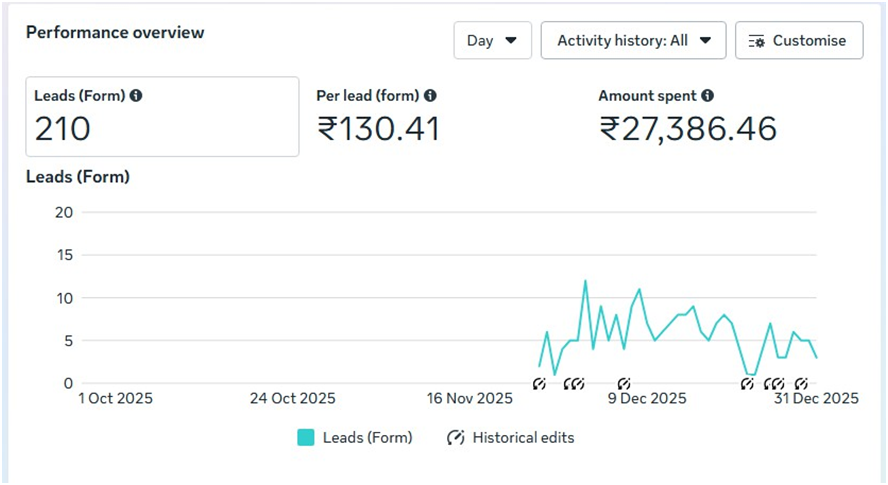
While the number of leads slightly decreased month over month, the quality improved significantly. This is reflected in the rising conversion rates, which indicate that the leads being generated were more relevant and more likely to take action.
What Made the Difference
Several factors contributed to the success of this campaign.
High-Intent Targeting
Reaching the right audience made a significant difference. Instead of casting a wide net, the campaigns focused on users who were more likely to be interested in Doubtbox’s services. This improved both lead quality and conversion rates.
Seamless User Experience
The use of instant lead forms eliminated unnecessary steps. Users could quickly share their details without being redirected, which helped capture intent at the right moment.
Consistent Creative Testing
Introducing new creatives every month kept the campaigns dynamic. It also allowed the team to identify top-performing formats and double down on them.
Data-Driven Optimization
Every decision was backed by performance data. Instead of relying on assumptions, the team continuously refined the campaigns based on real insights.
Clear Value Proposition
The messaging remained simple and direct. Users clearly understood what Doubtbox offered and why it was relevant to them. This clarity played a key role in driving conversions.
Key Insights
This campaign reinforced a few important lessons about lead generation in the EdTech space:
1. Quality Matters More Than Quantity
Generating a large number of leads is not useful unless they convert. Focusing on high-intent users leads to better overall performance.
2. Reducing Friction Increases Conversions
The easier it is for users to take action, the more likely they are to do so. Instant forms proved to be highly effective in this regard.
3. Consistency Builds Momentum
Running campaigns consistently allows platforms like Meta to learn and optimize better. This leads to improved performance over time.
4. Creative Plays a Crucial Role
Even the best targeting cannot compensate for weak creatives. Engaging visuals and clear messaging are essential for capturing attention.
5. Optimization Is Ongoing
There is no “set and forget” in performance marketing. Continuous monitoring and refinement are necessary to sustain results.
The Impact
Through this campaign, Doubtbox was able to establish a reliable lead generation system. The results were not just about numbers, they represented a structured approach to acquiring customers efficiently.
The improvement in conversion rates over time showed that the strategy was not only working but also evolving. The brand was able to attract better leads, improve engagement, and build a stronger foundation for future growth.

Conclusion
Advantage Marketing Solutions approached Doubtbox’s requirement with a clear focus on performance and efficiency. By combining smart targeting, seamless lead capture, and continuous optimization, they were able to deliver measurable results within a short period.
This case study highlights the true potential of Meta Platforms Ads when used strategically. It’s not just about running ads, it’s about understanding the audience, simplifying the journey, and constantly improving the approach.
For Doubtbox, this campaign marked a significant step forward in their growth journey. And for Advantage Marketing Solutions, it stands as another example of how the right strategy can turn marketing efforts into real, measurable outcomes.