
Digital Marketing for Hotel and Restaurant Businesses:
How to Increase Direct Bookings & Hotel Revenue
Most travellers start planning a trip on their phone. They search, scroll, compare and book, often in a single evening. If your property doesn't show up at the right moment, that booking goes to someone else. That's why digital marketing for hotel and restaurant businesses is no longer optional. Done right, it brings guests straight to you, cuts commission costs and grows revenue. Here's a simple look at how.
Why Hotels Need Digital Marketing
Hotel digital marketing is about being visible where your guests are already looking: Google, social media, maps and review platforms. A beautiful property and great service won’t fill rooms if nobody can find you online. Digital marketing in hospitality also gives you something traditional advertising never could: clear numbers. You can see who visited your website, what they clicked and which campaign led to a booking.
Digital Marketing in Hotel Industry: What Has Changed
Guests now research for days before they book. They read reviews, watch videos, check photos and compare prices. Digital marketing in the hotel industry means showing up at every one of those steps, not just the final click. Hotels that do this build trust early and win the booking.
Hotel Digital Marketing Starts With a Website That Converts
Your website is your best salesperson, working 24/7. But many hotel websites look nice and still lose visitors because booking feels confusing. A good site makes the next step obvious. Focus on:
Small fixes like these can noticeably lift your conversion rate.
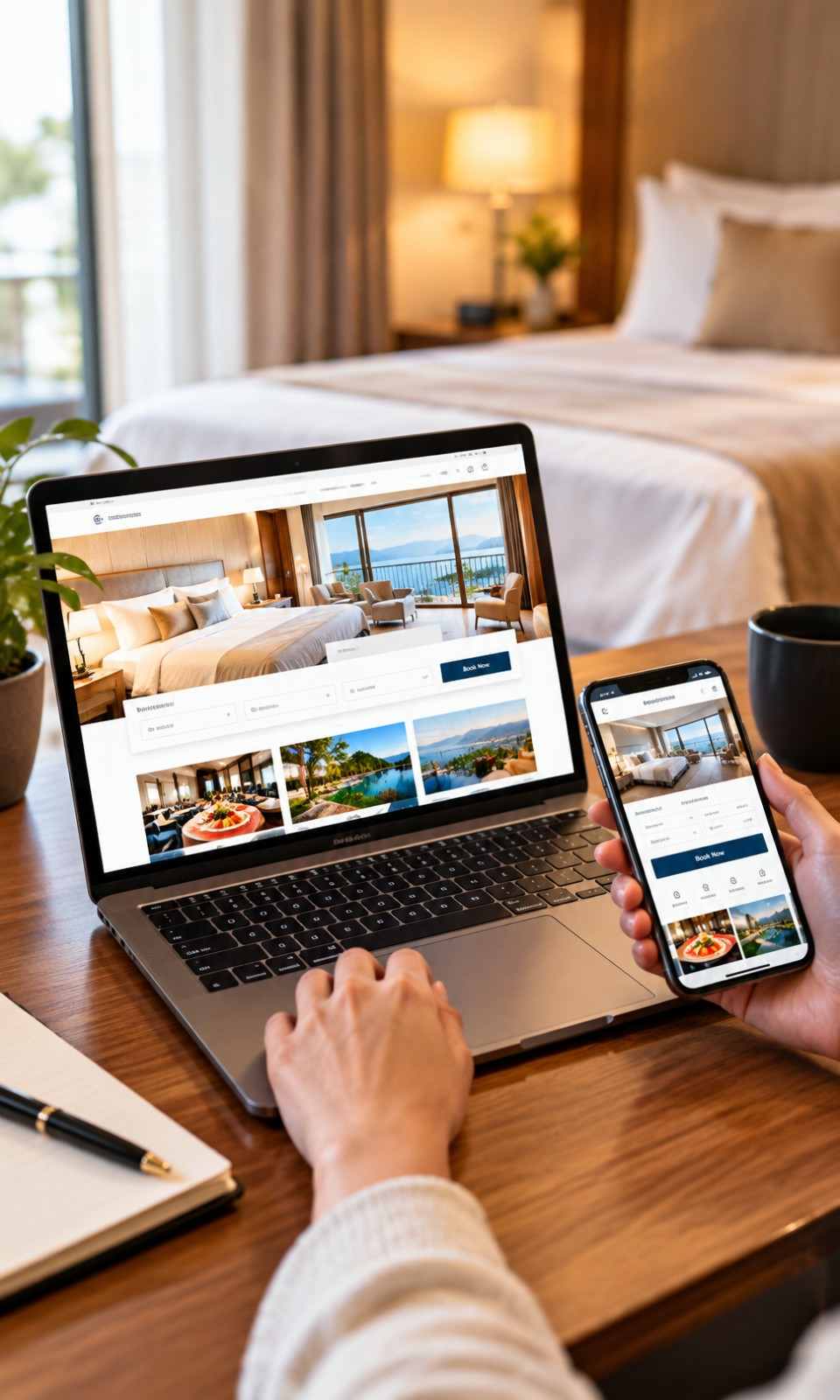
- Fast loading speed, especially on mobile
- High-quality photos and short videos of rooms, food and surroundings
- A simple booking engine with a clear "Book Now" button
- Direct-booking perks, like free breakfast or flexible cancellation
- Guest reviews and trust signals on key pages
Use SEO to Make Your Hotel More Visible on Google
When someone searches “beach resort with pool” or “family stay near me,” you want to be on the first page. SEO helps you get there. Start with the basics: use location-based keywords in page titles and headings, write a unique description for each room type, add alt text to images, and make sure your site works well on mobile. Over time, SEO brings steady, free traffic from people who are already looking for a stay like yours.
Optimize Google Business Profile for Local Visibility
Your Google Business Profile is often the first thing a traveller sees, even before your website. Claim it, fill in every detail and keep it updated. Add good photos, correct contact details, your booking link, amenities and opening hours. Reply to reviews, good or bad, and post regular updates and offers. A well-kept profile helps you appear in local searches and on Google Maps, where many “near me” decisions get made.
Run Google Ads to Reach High-Intent Travellers
SEO takes time. Google Ads gives you faster results. When someone searches “book a hotel for the weekend,” they’re ready to buy, and search ads put you in front of them at that exact moment. Add remarketing to bring back visitors who checked your rooms but didn’t book. Set clear budgets, target the right locations, and track every booking. A smart digital marketing strategy for hotel businesses mixes ads for quick wins with SEO for long-term growth.
Use Social Media Marketing to Showcase the Hotel Experience
Guests don’t just book a room. They book an experience. Instagram, Facebook and YouTube are perfect for showing it: the sunrise from a balcony, a chef plating a signature dish, a wedding setup, a quiet spa corner. Post reels, behind-the-scenes clips and real guest moments, and encourage guests to tag you. Keep it authentic rather than over-polished, and always add a booking link so interested viewers can act right away.
Use Content Marketing to Attract Travellers
Blogs, travel guides and videos can reach travellers before they’ve even picked a hotel. Write about local attractions, festivals, food, weekend itineraries or tips for first-time visitors. This builds trust, supports your SEO and positions your hotel as a local expert. A post like “Things to Do Near Our Hotel” can bring in readers who later become guests. Then use email to stay in touch with past guests through seasonal offers and special packages.
Reduce Dependence on OTAs Through Digital Marketing
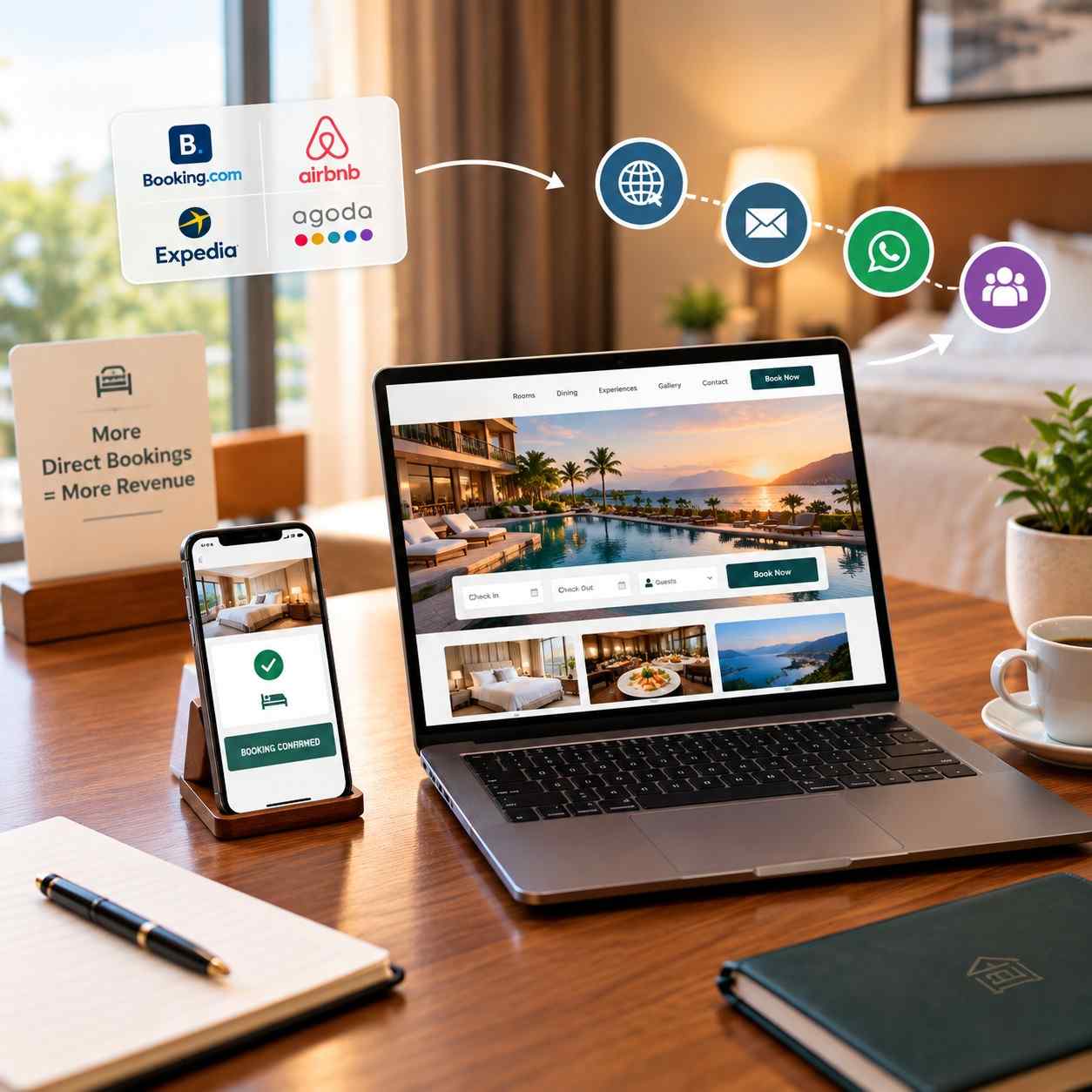
Online travel agencies are useful for reach, but their commissions can take a big bite out of your revenue. The goal isn’t to drop them completely. It’s to find a healthier balance. A solid hotel digital marketing strategy helps you:
- Drive more traffic straight to your own website
- Offer perks and packages that OTAs can't match
- Promote exclusive offers on your own channels
- Build an email and WhatsApp list of past guests for repeat bookings
Every direct booking saves you a commission and gives you the guest’s contact details, so you can market to them again.
Restaurant Digital Marketing: The Same Rules Apply
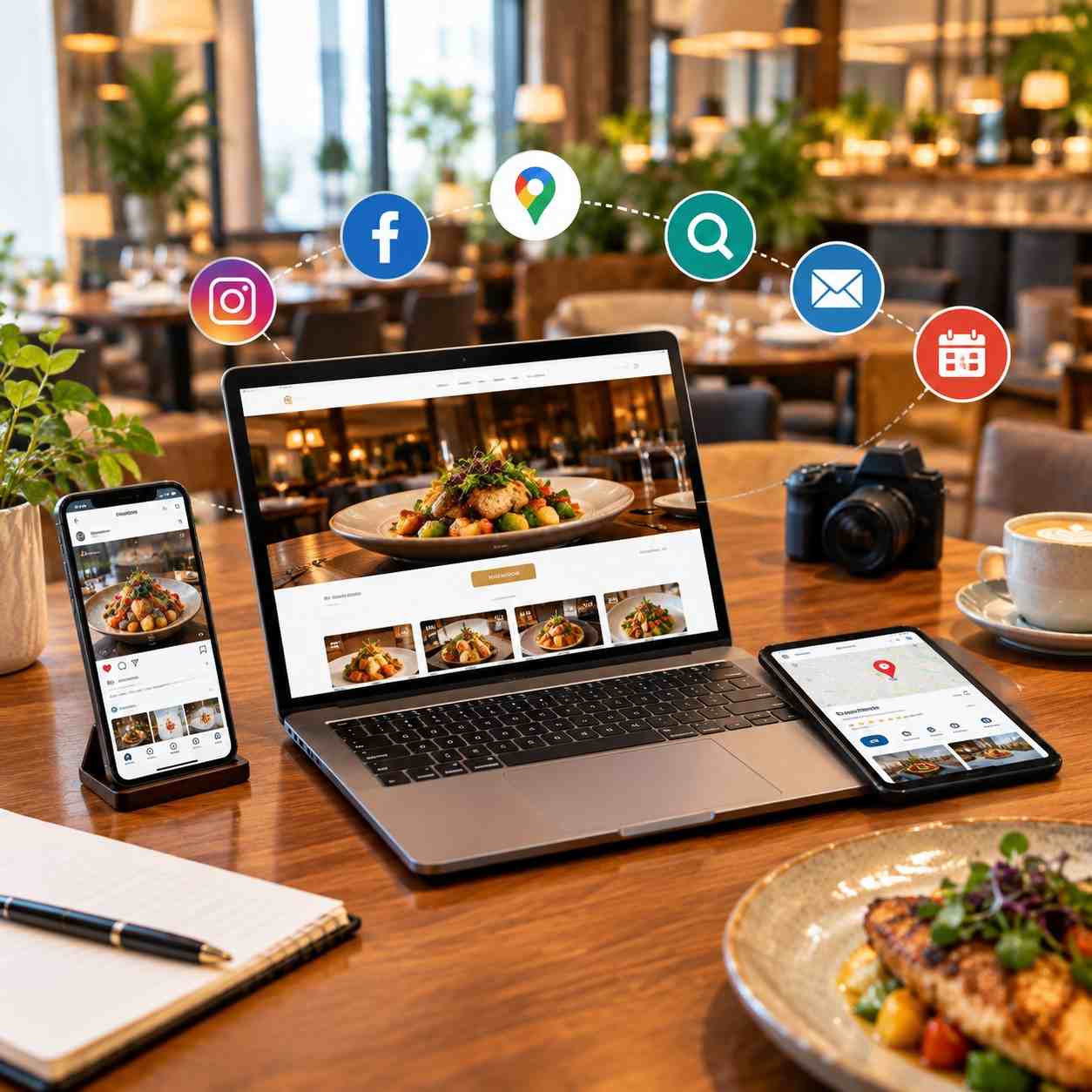
Everything above works for restaurants too. Digital marketing for restaurant businesses starts with the same foundations: a website with the menu and a reservation button, a complete Google Business Profile, local SEO and social media full of food reels and offers. Many hotels have their own restaurants, so promoting both together helps fill tables and rooms at the same time. A guest who finds you for dinner may come back for a weekend stay.
Why Hotels Should Work With a Hotel-Focused Digital Marketing Agency
Managing all of this alone is a lot, especially when you’re busy running daily operations. A digital marketing agency for the hospitality industry already understands seasonal demand, booking patterns and what makes travelers click. They know how to balance SEO, ads, social media and content into one plan instead of scattered efforts. The same goes for a digital marketing agency for restaurant brands, where menu launches, festive campaigns and local visibility matter just as much.
A hospitality-focused team also brings the right tools and reporting, so you can see exactly which efforts bring bookings and which don’t. That means your budget goes where it works, and you spend less time guessing.
Final Thoughts
Hospitality digital marketing isn’t about doing everything at once. It’s about being visible, being trustworthy and making booking easy. Start with a strong website and a well-managed Google Business Profile, then add SEO, ads, social media and content as you grow. Over time, you’ll depend less on OTAs, earn more direct bookings and see healthier revenue.